A Week with Raya Uma Datta in Vancouver
by Andrei Rybkin
Part Two: Familiar Poses and Unexpected Questions.
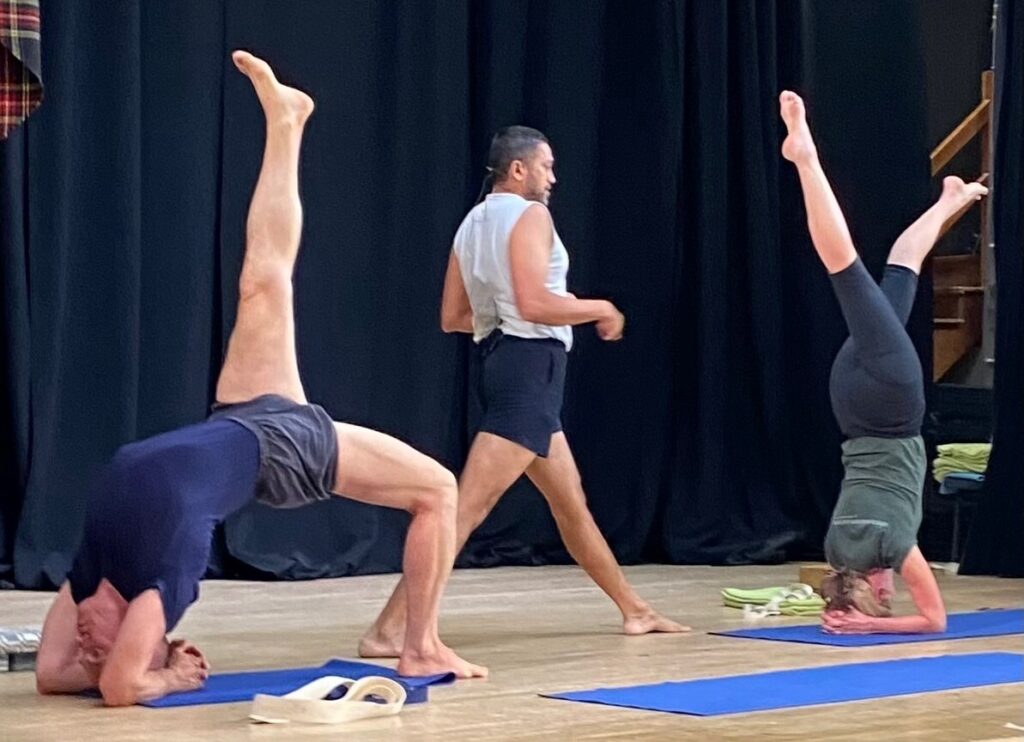
The first day’s kick-off was energetic, featuring a series of standing poses. Who was able to hold Virabhadrasana III for the full proposed timing? In the afternoon discussion, Raya suggested a conversation, which soon called for participation.
Poses That Can Wait Until the Next Life
The first task seemed simple: make a list of favourite asanas. “If you have to think about it, it’s not your favourite asana,” said Raya.
Then came a second list: the poses people disliked. Someone admitted that this one was much easier to write. Finally, a third: poses they never attempted. Perhaps next time. Perhaps in the next life. Or three lives from now. Raya generously left the options open.
Behind the joke was a serious question. What shaped those choices: curiosity, habit, fear, or an unpleasant experience?
Making Time to Meet Ourselves
The lists led to another question: what gets in the way of practising independently?
“I don’t have time” might often become a cause of scarcity in practice. Raya suggested exploring the idea of a perfect practice: it must last ninety minutes, include every category of asanas, and meet high expectations.
Raya recalled the first months of his own practice. He would arrive in the hall with little idea of what to do next. Sometimes he became bored and left. But whenever he missed a session, Guruji would ask at their next meeting, “Where were you yesterday?”
Ten or fifteen minutes matter too. A short practice allows us to establish a relationship with something we have not yet learned to give more time to.
Pranayama Begins with Something Small
Raya brought the same approach to breathing. There is no need to immediately set aside half an hour or an hour for pranayama. To begin, it can be enough to settle into a suitable supine pose and pay attention to the breath. Five to ten minutes a day can offer a manageable beginning to this regular work: quietly observing inhalation and exhalation, getting acquainted with their movement, and gradually learning to stay with them. Raya compared it to learning to write. First, a child scribbles on paper. Eventually, individual lines become letters. We do not need to demand calligraphy from the first attempts.
Keeping the Body Alive and Responsive
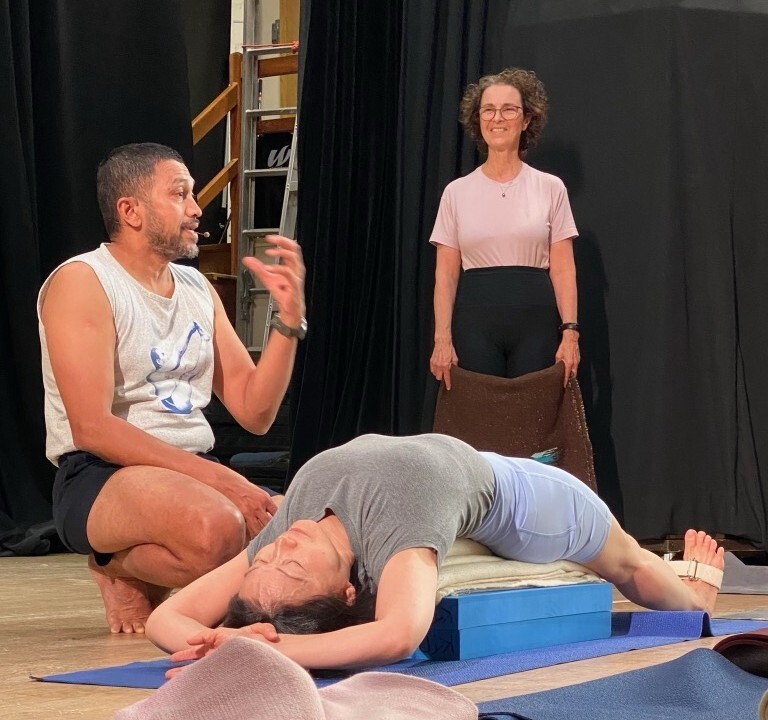
Raya used the word “moisture” to describe a body that stays supple, alive, and able to breathe freely. Like soil that needs moisture for a seed to grow, the body needs softness alongside effort. He encouraged us to respect our own build and notice when extra effort was creating tension in the body. In quieter poses, staying with the breath offered a way to let go of some of that effort and settle.
Reading the Book Through Practice
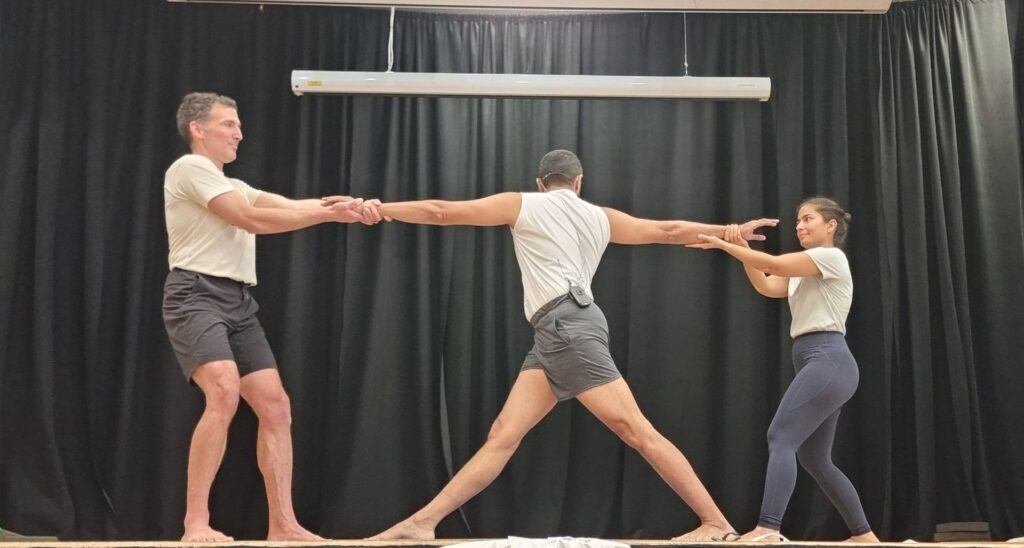
On September 17, the investigation continued in Light on Yoga. Raya invited participants to examine the order of the asanas and the photographs: why did a pose appear at this particular point, what had prepared it, and where did it lead next?
Raya showed how learning in one pose can help us understand another. Even a simple instruction such as “straighten your legs” can call for different actions in different positions. Some poses help us prepare; others give us time to stay and explore what we have learned.
One of the participants, Menka, expressed it in pure appreciation: “loved that he asked us not to be linear thinkers, but to have an even more open mind and understanding that there are different ways and solutions to different problems and situations.”
Balance Has to Be Felt
On September 18, came dynamic transitions and arm balances. This required coordination, curiosity to carry forward, maybe even stubbornness to support the inner willingness to try again. Who didn’t break a sweat?
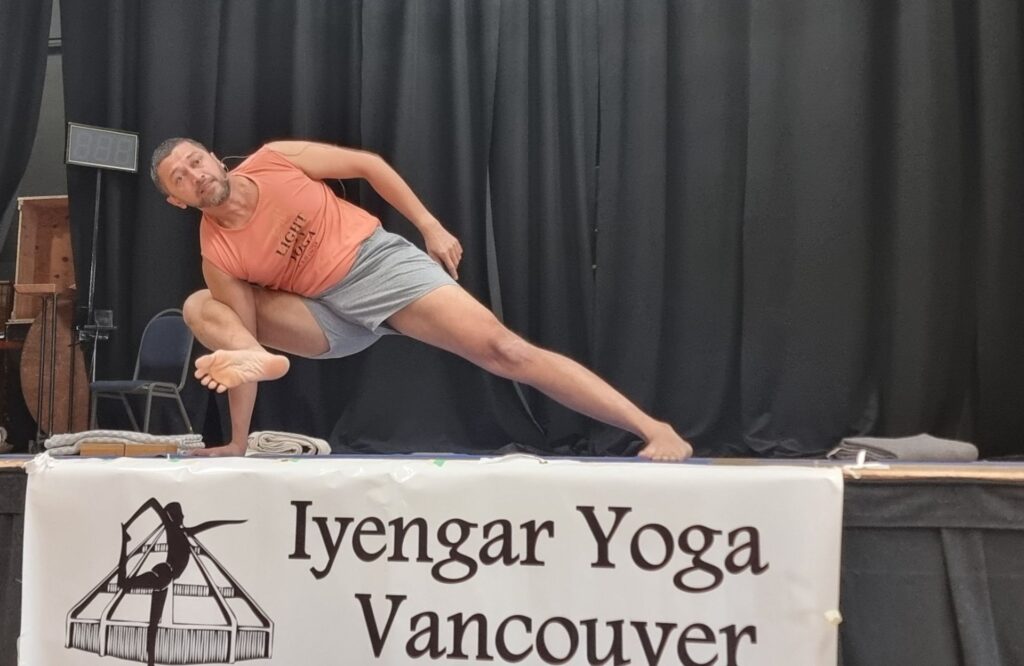
To explain balance, Raya turned to the bicycle. You can describe how to hold the handlebars and where to look. But at some point, everything has to come together in the experience of balancing.
Raya’s humour was present throughout the sessions: an observation became a joke, and the joke left a question worth investigating. Participants were beginning to ask their own questions. How can we practise regularly? How can we distinguish useful effort from gripping? How can we keep our curiosity alive, both in active work and in a few quiet minutes with the breath?
About the Author
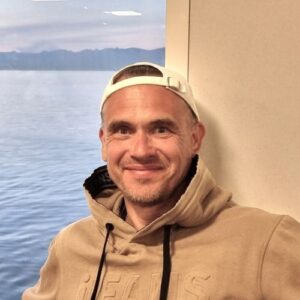
Andrei is a former corporate executive with 25 years in emerging markets and a dedicated Iyengar Yoga practitioner since 2012. As an apprentice teacher, he continues to learn through steady practice and observation. He is the founder of MomentumSoul Yoga Solutions, developing a structured digital platform for thoughtful, methodical Iyengar yoga self-practice rooted in precision and clarity.